
Saturday, September 24, 2016

Thursday, September 22, 2016
Download Forrester Wave for APM Q3 2016
You can download latest report from AppDynamics who is named leader.
https://www.appdynamics.com/the-forrester-wave-application-performance-management/
Wednesday, September 21, 2016
Wednesday, September 14, 2016
Disaster Recovery reference architecture for data stores
It is always recommended to do DR planning at solution level which means that all the components making the solution should be well co-ordinated during DR. But to reach the solution level, it is important that DR design of individual components is ready.
This post documents a reference design of an important component of any solution which is Data/State store. This component is accessed by application tiers. This post is not about High Availability – Load Balancing combination. But, deals with DR scenarios where the secondary/DR site is in hot/warm/cold state.
Below diagram states the reference design of how the DR architecture commonly looks like. DR Agents play a critical role of when to call it a DR and based on that the app configuration changes to connect to available instance of Data Store.

So what are the considerations when designing the DR solution for Data Store ? Here are few important ones:
- How application will store connection string to data store and how it will get updated at the time of DR.
- How the DR site will be provisioned ?
- What will be the state of DR site at normal times – hot/warm/cold. This will depend on RTO/RPO objectives and will also determine the provisioning method.
- How the replication of data will happen between primary and DR site.
- How the failover will happen from primary to DR site ?
- How the failback will happen from DR to primary site ?
Tuesday, September 13, 2016
When to move out of your comfort zone
In the recent issue of HBR, Andy Molinsky has come with something really useful around when to move out of your comfort zone. There is lot of advice on moving out but this one really helps you prepare that. Here is a quick summary of what Andy recommends.

Friday, September 9, 2016
IT4IT–Business of IT

IT4IT is the latest open standard from Open Group which tries to fill the gap created due to individual frameworks available for various lifecycle stages of Business of IT. These frameworks do not integrate well with each other and that’s what IT4IT tries to address.
I recently got a chance to meet Lars Rossen who is the Chief Architect of IT4IT and his vision around IT4IT and future of Business of IT is exactly what industry needs today.
..more coming soon on this.
Friday, December 25, 2015
9 UX Infographics you can’t afford to miss
UXPA Magazine site has interesting collection of 9 infographics which summarize the field of UX in a very effective way. So, if you are interested in UX, you can’t afford to miss any of the.

Grab all of it here : http://uxpamagazine.org/ux-infographics/
Thursday, June 25, 2015
The Open Container Project

The Open Container Project is a step in right direction and above all at right time. Containers are going to be everywhere. Before that happens it was important that standards are set for the benefit of end customers. They are biggest enablers of Agile DevOps & Microservices.
The Open Container Project is a lightweight, open governance structure, to be formed under the auspices of the Linux Foundation, for the express purpose of creating open industry standards around container formats and runtime. The OCP was launched on June 22nd 2015.
Project Sponsors: Apcera, AWS, Cisco, CoreOS, Docker, EMC, Fujitsu, Google, Goldman Sachs, HP, Huawei, IBM, Intel, Joyent, Pivotal, the Linux Foundation, Mesosphere, Microsoft, Rancher, Red Hat, VMWare.
The specification will be available at https://github.com/opencontainers/specs. The newly expanded team of maintainers (both original libcontainer maintainers and the appc maintainers) are busy preparing the first draft of the specification, and intend to release it in 2-3 weeks.
Docker is donating its container format and runtime, runC, to the OCP to serve as the cornerstone of this new effort. It is available now at https://github.com/opencontainers/runc.
Tuesday, June 23, 2015
How to Build Cloud-based Microservice Environments
Presented By VoltDB and Full 360
In a high volume streaming data environment that's required to handle millions of events, in real-time, a primary goal is to make sure the data infrastructure can not only manage this massive streaming data, but ensure the solution is scalable and easily repeatable.
Developers are looking into implementing microservice infrastructures, or basically complex applications made up of small, independent processes communicating with each other using language-agnostic APIs, with each service focused on one specific task.
The intended result is to help minimize downtime, expedite migrations, manage several services at once, and deploy new clusters without interrupting performance.
In this webinar VoltDB and Full 360 present a case study of the fast data infrastructure developed for one of the largest and most successful loyalty programs in the world.
Join us June 25th at 11:30 EST for this free webinar.
More info and registration:
Saturday, June 20, 2015
The rise of Pair-Programming
As agile is getting into more and more software development teams so is the importance of pair-programming.
At core pair-programming is all about two people sharing single development workstation and working on same development task. They code & watch/review in turns.
While at first look it just seems to be wastage of efforts, the reduction in time taken to complete the task and improvement in quality of code delivered, outweighs any additional effort. Here are some statistics:


Read the below paper and start practicing pair-programming today.
Sunday, September 22, 2013
Free Analytics for Retail eBook
Here is another Dummies eBook available for free courtesy IBM.
Contents at a Glance
Introduction . . . . . . . . . . . . . . . . . . . . . . . . . . . . . . . . . . . . . .1
Chapter 1: Understanding Business Analytics . . . . . . . .3
Chapter 2: Meeting the Demands
of the Smarter Consumer . . . . . . . . . . . . . . . . . . . . . . . .11
Chapter 3: Harnessing the Power of Information . . . . .17
Chapter 4: Measuring the Impact of Decisions . . . . . . .27
Chapter 5: Using Predictive Analytics
to Anticipate and Respond . . . . . . . . . . . . . . . . . . . . . .41
Chapter 6: Social Marketing and
Content Analysis Made Easy . . . . . . . . . . . . . . . . . . . .53
Chapter 7: Ten Ways to Improve
Shopping Experiences . . . . . . . . . . . . . . . . . . . . . . . . . .63
Grab it from here
Tuesday, September 10, 2013
Leadership Capability Framework
Loved this model of Leadership Capability Framework published by Australia Public Service Commission.

Shapes strategic thinking
Inspires a sense of purpose and direction
- Personally contributes to, shapes and champions the organisation's vision and goals, relating these to government requirements.
- Translates broad strategy into practical terms for others, and creates a shared understanding of what has to be achieved.
- Within the overall strategic context, presents others with an integrated picture of the actions and priorities that will be required.
- Provides them with a clear sense of direction and endeavours to unite understanding among all levels within the organisation.
Focuses strategically
- Develops advice to government on potential outcomes, and develops a long term perspective on organisational success.
- Integrates a 'big picture' view of goals with how to achieve them.
- Operates on the basis of a 'whole of government' framework and takes the broader context into account.
- Ensures portfolio effort contributes to cross-government priorities.
- Envisages what might be and how future possibilities balance with the 'here and now'.
Harnesses information and opportunities
- Seeks to acquire knowledge, and is open to new information and different perspectives.
- Values finding out about Australian and global best practice (public and private sector) and considers the workings of the organisation within this context.
- Demonstrates business acumen by thoroughly researching the market that the organisation operates in (and opportunities offered and constraints imposed) to yield greater efficiencies and improve quality of service.
- Keeps abreast of major technological changes and their impacts.
Shows judgement, intelligence and commonsense
- Grasps complexity and identifies issues that tend to be overlooked by others.
- Thinks through problems from various angles, and analyses them dispassionately and objectively.
- Probes and critically evaluates information before applying both intellect and experience to final judgement.
- Is willing and able to question traditional assumptions and practices rather than taking things as given.
- Has the capacity to provide originality of thought and develop innovative solutions.
Achieves results
Builds organisational capability and responsiveness
- Initiates fluid and flexible resourcing options based on an appreciation of emerging requirements in a constantly changing environment.
- Looks outside of organisational 'silos' to identify what resourcing combination will deliver the best results, rather than being bound by existing organisational structures and processes.
- Responds flexibly to various stakeholder requirements and changing circumstances as they arise, varying deployment of resources within imposed constraints.
- Exploits the advantages offered by information technology.
- Takes action to ensure sustainability.
Marshals professional expertise
- Values specialist expertise and places emphasis upon creating an environment which facilitates the sharing and effective utilisation of professional knowledge and skills.
- Ensures relevant professional input from others is obtained.
Steers and implements change and deals with uncertainty
- Develops and oversees the implementation of change initiatives in a sometimes uncertain environment.
- Defines high level objectives and ensures translation into practical implementation strategies.
- Undertakes both long and short term planning phases and sets timescales for completion.
Ensures closure and delivers on intended results
- Engenders a culture of achievement, by ensuring ideas and intended actions become reality and that planned projects actually result in expected outputs.
- Puts systems in place to establish and measure accountabilities.
Cultivates productive working relationships
Nurtures internal and external relationships
- Builds relationships with Ministers, within the organisation and with key people in external organisations.
- Proactively creates a professional network and develops mutually beneficial relationships based on respect.
- Shows commitment to customer service.
Facilitates cooperation and partnerships
- Puts effort into developing a work environment where people pull together and value collaboration and teamwork.
- Creates a sense of 'interconnectedness' with other departments and agencies, ensuring opportunities to share views and ideas.
- Personally manifests strong interpersonal relations by role-modelling 'team-player' behaviour, including a willingness to consult and listen.
Values individual differences and diversity
- Supports and respects the individuality of others and recognises the benefits of diversity of ideas and approaches.
- Recognises different skill areas and levels of expertise.
- Understands others and responds to them in an appropriate way.
Guides, mentors and develops people
- Inspires ongoing learning in others.
- Gives timely recognition for good performance.
- Motivates others with an enthusiasm to 'give their all' by setting challenging goals, as well as supporting and encouraging them when they need assistance to overcome problems.
- Helps others to address areas of weakness by encouraging them to take an active role in their own development, and creating a climate with right opportunities to do so.
- Understands when it is appropriate to confront issues and takes action to deal with difficult performance situations.
Exemplifies personal drive and integrity
Demonstrates public service professionalism and probity
- Adheres to and promotes the APS Values and ethical framework as set out in the APS Code of Conduct.
- Serves the government of the day irrespective of personal preferences.
- Implements policies and programs based on corporate decisions rather than personal views.
Engages with risk and shows personal courage
- Is prepared to be forthright and 'tell it like it is' (and not how people might like it to be).
- Is independently minded and willing to challenge ideas and confront issues.
- Is prepared to acknowledge when in the wrong, and learns from mistakes.
- Is also prepared to ask for help and values advice from others.
Commits to action
- Is determined, highly motivated and action-oriented.
- Takes personal responsibility for getting things done, and for the success of the organisation.
- Handles issues proactively and tries to shape events.
- Doesn't procrastinate.
- Readily invests energy and initiative into progressing work.
Displays resilience
- Remains focused on the objectives even in difficult circumstances.
- Bounces back after setbacks and remains positive.
- Maintains energy and willingly invests extra effort when required.
Demonstrates self awareness and a commitment to personal development
- Shows strong commitment to continued learning.
- Actively seeks feedback from a wide range of sources.
- Takes responsibility for own development and for managing self in a way which enables sustained performance.
- Looks for opportunities to enhance own skills.
- Values continuing development.
Communicates with influence
Communicates clearly
- Produces user-friendly verbal and written communication that is clear and concise.
- Ensures unambiguous delivery of the message, and checks that it has been understood as intended.
- Keeps people up to date and fully informed of any changes to the original communication.
Listens, understands and adapts to audience
- Listens actively to ensure views and information are properly exchanged.
- Checks with others to ensure their views have been accurately understood.
- Uses and adapts style as necessary to meet the requirements of the audience.
- Creates opportunities to listen to those whose input can add value.
Negotiates persuasively
- Establishes credibility and approaches negotiations persuasively.
- Offers a convincing rationale which has been thought through in advance and carefully positioned with reference to desired organisational outcomes.
- Allows for a genuine contest of ideas and pulls disparate views into a coherent position, and finds common ground to facilitate agreement and acceptance of mutually beneficial solutions.
- Reaches negotiated positions, through compromise, which lead to the achievement of the required outcomes.
Tuesday, August 13, 2013
Healthy Computing Report
Microsoft’s PC accessories group recently did a survey in 10 markets around the world to determine common modern computing habits of workers and the implications of those habits, with a particular focus on the health, comfort and productivity impact on workers.
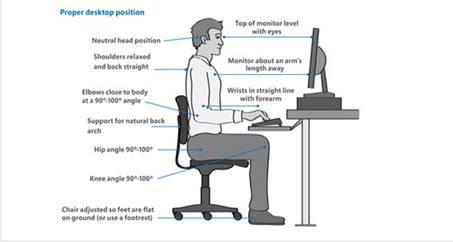
Report is definitely of every individual’s interest. You can grab the full report here.
http://www.microsoft.com/en-us/news/Features/2013/Aug13/08-13HealthyComputing.aspx
Sunday, August 11, 2013
Download Gartner MQ for Enterprise Search

Gartner has released its 2013 MQ for Enterprise Search. Get your complimentary copy here:
Download Magic Quadrant for Sales Force Automation
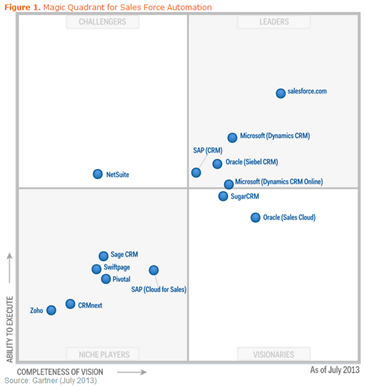
Gartner has released its 2013 MQ for Sales Force Automation. Get it complimentary from following link:
Download Magic Quadrant for Unified Communications

Gartner has published their 2013 MQ for Unified Communications. You can get the complimentary report from following link.
Tuesday, August 6, 2013
The Illusions of Big Data
Gartner’s Svetlana has made an interesting post on current expectations from Big Data and how much of it can be realized. Do not miss this one ….
http://blogs.gartner.com/svetlana-sicular/the-illusions-of-big-data/
Monday, August 5, 2013
HL7 standards for Healthcare Industry
Just a quick note, if you work with Healthcare industry, you should be fully aware of information that the following organization provides.

Number of useful standards and reference information models. Most of the technology vendors like Microsoft, IBM, Oracle, etc. provides compatibility with these standards.
HL7 standards are grouped into reference categories:
- Section 1: Primary Standards - Primary standards are considered the most popular standards integral for system integrations, inter-operability and compliance. Our most frequently used and in-demand standards are in this category.
- Section 2: Foundational Standards - Foundational standards define the fundamental tools and building blocks used to build the standards, and the technology infrastructure that implementers of HL7 standards must manage.
- Section 3: Clinical and Administrative Domains - Messaging and document standards for clinical specialties and groups are found in this section. These standards are usually implemented once primary standards for the organization are in place.
- Section 4: EHR Profiles - These standards provide functional models and profiles that enable the constructs for management of electronic health records.
- Section 5: Implementation Guides - This section is for implementation guides and/or support documents created to be used in conjunction with an existing standard. All documents in this section serve as supplemental material for a parent standard.
- Section 6: Rules and References - Technical specifications, programming structures and guidelines for software and standards development.
- Section 7: Education & Awareness - Find HL7's Draft Standards for Trial Use (DSTUs) and current projects here, as well as helpful resources and tools to further supplement understanding and adoption of HL7 standards.
Friday, August 2, 2013
Essential Cloud Computing
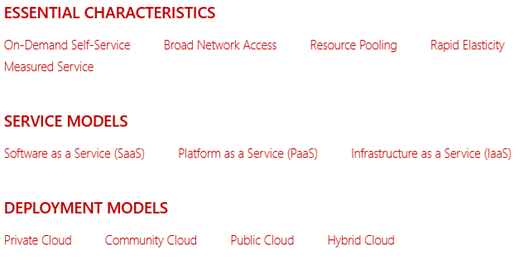
While Cloud Computing has reached the initial level of maturity, there is till enough evidence of confusion over what cloud computing is. NIST has created a very simple literature on essentials of cloud computing. http://csrc.nist.gov/publications/nistpubs/800-145/SP800-145.pdf
Essential Characteristics:
On-demand self-service. A consumer can unilaterally provision computing capabilities, such as server time and network storage, as needed automatically without requiring human interaction with each service provider.
Broad network access. Capabilities are available over the network and accessed through standard mechanisms that promote use by heterogeneous thin or thick client platforms (e.g., mobile phones, tablets, laptops, and workstations).
Resource pooling. The provider’s computing resources are pooled to serve multiple consumers using a multi-tenant model, with different physical and virtual resources dynamically assigned and reassigned according to consumer demand. There is a sense of location independence in that the customer generally has no control or knowledge over the exact location of the provided resources but may be able to specify location at a higher level of abstraction (e.g., country, state, or datacenter). Examples of resources include storage, processing, memory, and network bandwidth.
Rapid elasticity. Capabilities can be elastically provisioned and released, in some cases automatically, to scale rapidly outward and inward commensurate with demand. To the consumer, the capabilities available for provisioning often appear to be unlimited and can be appropriated in any quantity at any time.
Measured service. Cloud systems automatically control and optimize resource use by leveraging a metering capability1 at some level of abstraction appropriate to the type of service (e.g., storage, processing, bandwidth, and active user accounts). Resource usage can be monitored, controlled, and reported, providing transparency for both the provider and consumer of the utilized service.
Service Models:
Software as a Service (SaaS). The capability provided to the consumer is to use the provider’s applications running on a cloud infrastructure2. The applications are accessible from various client devices through either a thin client interface, such as a web browser (e.g., web-based email), or a program interface. The consumer does not manage or control the underlying cloud infrastructure including network, servers, operating systems, storage, or even individual application capabilities, with the possible exception of limited user-specific application configuration settings.
Platform as a Service (PaaS). The capability provided to the consumer is to deploy onto the cloud infrastructure consumer-created or acquired applications created using programming languages, libraries, services, and tools supported by the provider.3 The consumer does not manage or control the underlying cloud infrastructure including network, servers, operating systems, or storage, but has control over the deployed applications and possibly configuration settings for the application-hosting environment.
Infrastructure as a Service (IaaS). The capability provided to the consumer is to provision processing, storage, networks, and other fundamental computing resources where the consumer is able to deploy and run arbitrary software, which can include operating systems and applications. The consumer does not manage or control the underlying cloud infrastructure but has control over operating systems, storage, and deployed applications; and possibly limited control of select networking components (e.g., host firewalls).
Deployment Models:
Private cloud. The cloud infrastructure is provisioned for exclusive use by a single organization comprising multiple consumers (e.g., business units). It may be owned, managed, and operated by the organization, a third party, or some combination of them, and it may exist on or off premises.
Community cloud. The cloud infrastructure is provisioned for exclusive use by a specific community of consumers from organizations that have shared concerns (e.g., mission, security requirements, policy, and compliance considerations). It may be owned, managed, and operated by one or more of the organizations in the community, a third party, or some combination of them, and it may exist on or off premises.
Public cloud. The cloud infrastructure is provisioned for open use by the general public. It may be owned, managed, and operated by a business, academic, or government organization, or some combination of them. It exists on the premises of the cloud provider.
Hybrid cloud. The cloud infrastructure is a composition of two or more distinct cloud infrastructures (private, community, or public) that remain unique entities, but are bound together by standardized or proprietary technology that enables data and application portability (e.g., cloud bursting for load balancing between clouds).
Sunday, April 14, 2013

Subscribe to:
Posts (Atom)